

Quick Summary (TL;DR for Non-Profit Leaders & Development Directors)
- The Critical Giving Window: Nearly one-third of all charitable donations occur in December, with 10% occurring in the final 72 hours of the year. Launching your direct mail campaign between mid-October and mid-November is essential to prime donors before year-end digital appeals hit.
- Tactile Authenticity vs. Digital Clutter: While digital inboxes face historic spam saturation, physical donor mailers command focused attention, evoke empathy through tactile paper weight and imagery, and boast response rates significantly higher than standalone email appeals.
- Frictionless Response Mechanics: Effective donor packages combine compelling storytelling with clear visual hierarchy, pre-filled contribution tiers, remittance envelopes, and dynamic QR codes that link directly to mobile-optimized donation pages.
- In-House Postal Savings: Falconer Printing handles full donor appeal campaigns; from layout design to CASS-certified list scrubbing, variable data printing, automated inserting, and direct postal drop-off, saving local non-profits substantially on postage and production costs. Call 716-665-2504 or visit falconerprinting.com.
The Stakes of the Year-End Fundraising Window
By Russell Hartzell, MBA
Sales & Marketing Consultant, Falconer Printing & Design
For executive directors, development officers, and board members across Western New York, the fourth quarter is not just another operational quarter; it defines the organization’s financial runway for the upcoming year. According to benchmark fundraising analytics, non-profit organizations consistently receive approximately 30% of their total annual donations during the month of December, with an astonishing 10% arriving in the final three days of the calendar year.
Yet, the difference between an appeal campaign that shatters fundraising targets and one that underperforms rarely hinges on the worthiness of the cause. More often than not, it comes down to two critical operational elements that are frequently overlooked until the last minute: flawless campaign timing and intentional, human-centered print design.
The Critical Appeal Timeline: Why November Mailings Win
One of the most frequent missteps non-profits make is delaying their print appeal until December. By the time December arrives, donor attention is split between holiday festivities, family commitments, and an onslaught of year-end corporate marketing.
Direct mail functions as the foundation of your multi-channel year-end campaign. A physical piece arriving in mid-November establishes psychological awareness, emotional credibility, and mission alignment well ahead of Giving Tuesday and final tax-deductible deadlines.
| Timeline Phase | Key Action Items | Strategic Objective
|
|---|---|---|
| Early to Mid-October | Audit donor database, update contact information through NCOA (National Change of Address), establish giving tiers, and draft core beneficiary stories. | Ensure clean data hygiene to eliminate wasted postage and returned mail. |
| Late October – Early November | Complete graphic design proofs, print appeal letters, remit envelopes, and outer carrier envelopes; initiate automated variable-data personalization. | Prepare finished print collateral for bulk presorting and postal induction. |
| Mid-November (In-Home Window) | Deliver physical donor packages directly to mailboxes across target communities. | Prime donors prior to Thanksgiving and establish early gift commitments. |
| December (Follow-Up & Push) | Deploy coordinated email reminders, social media impact updates, and targeted follow-up postcards to non-responders. | Capture last-minute tax-deductible giving with an omnichannel conversion loop. |
The Anatomy of a High-Converting Donor Appeal Package
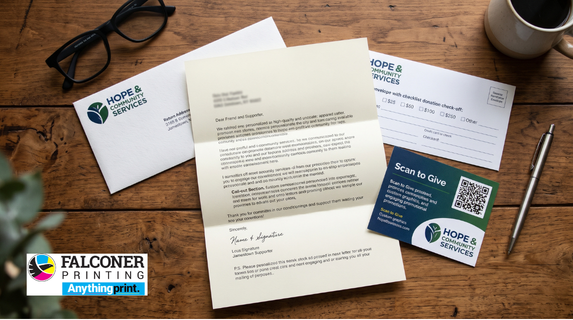
In fundraising, visual aesthetics must serve functional psychology. An effective donor appeal does not look like a mass corporate flyer; it feels personal, urgent, and credible. Below are the key design principles that drive measurable lifts in donor response rates:
1. High-Touch Paper Stocks and Sensory Credibility
Physical texture signals organizational stewardship. Using a lightweight, glossy flyer can inadvertently convey commercial advertising rather than a dignified mission. Conversely, choosing an uncoated, tactile text stock for the letter paired with a crisp, branded outer envelope conveys authenticity and institutional longevity before the donor even begins reading.
2. The Skimmer-Friendly Visual Hierarchy
Most prospective donors will scan your appeal letter before reading a single paragraph in full. If the page is a dense, uninterrupted wall of text, cognitive load increases and the piece is discarded. Incorporate intentional visual waypoints:
- Compelling Subheads and Pull Quotes: Highlight specific beneficiary milestones or urgent community challenges.
- Strategic Boldface: Emphasize the tangible impact of specific contribution amounts.
- A Handwritten-Style Postscript (P.S.): The P.S. is statistically the second most-read element of a donor letter after the opening salutation. Use it to reiterate the core deadline and donation link.
3. Personalization Through Variable Data Printing (VDP)
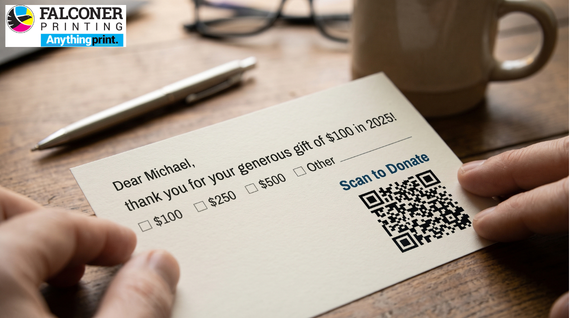
Addressing a long-time supporter as “Dear Friend” diminishes years of goodwill. Using modern digital presses, variable data printing allows non-profits to personalize every individual piece seamlessly; including custom salutations, references to the donor’s previous giving year, and customized ask strings based on their historic contribution tiers.
4. Frictionless Response Channels: The Print-to-Digital Bridge
Donors fall into distinct generational demographics regarding payment preferences. A best-in-class donor package must accommodate both traditional and digital giving pathways:
- The Direct Response Remittance Envelope: A pre-addressed, postage-paid remit envelope with checkbox gift increments ($50, $100, $250, Other) for supporters who prefer check or credit card mail-backs.
- Dynamic QR Code Integration: High-visibility QR codes placed on the letter and response card that allow younger donors and mobile users to scan directly to a pre-populated, mobile-responsive donation form.
Why In-House Print & Mail Fulfillment Protects Non-Profit Budgets
Every dollar saved on administrative overhead is a dollar redirected directly to your mission. Coordinating with multiple separate vendors—a designer in one location, a printer in another, and a third-party mail house down the highway, creates unnecessary delays, markups, and coordination errors.
At Falconer Printing & Design, our team manages the entire fundraising workflow under a single roof in Falconer, New York. Because we execute automated postal presorting, barcoding, CASS certification, automated machine folding, tabbing, inserting, and direct delivery to the postal distribution center, our non-profit partners qualify for substantial postal automation discounts that dramatically undercut standard retail postage rates.
Equip Your Organization for Year-End Success
Whether you represent an established regional healthcare foundation, an animal rescue, a local arts council, or a grassroots community group in Chautauqua County, strategic donor appeals are the most reliable tool to rally your community around your mission.
Let’s collaborate to make your upcoming fundraising campaign your most successful one yet.

- Author: Russell Hartzell, MBA (Sales & Marketing Consultant)
- Phone: 716-665-2504
- Email: info@falconerprinting.com
- Website: falconerprinting.com
- Address: 66 E. Main Street, Falconer, NY 14733
